Sunday, 1 December 2013

Autumn in Gascony: Photo blog


Kakis on leafless trees against the blue sky
St Mont vines in Marciac

     
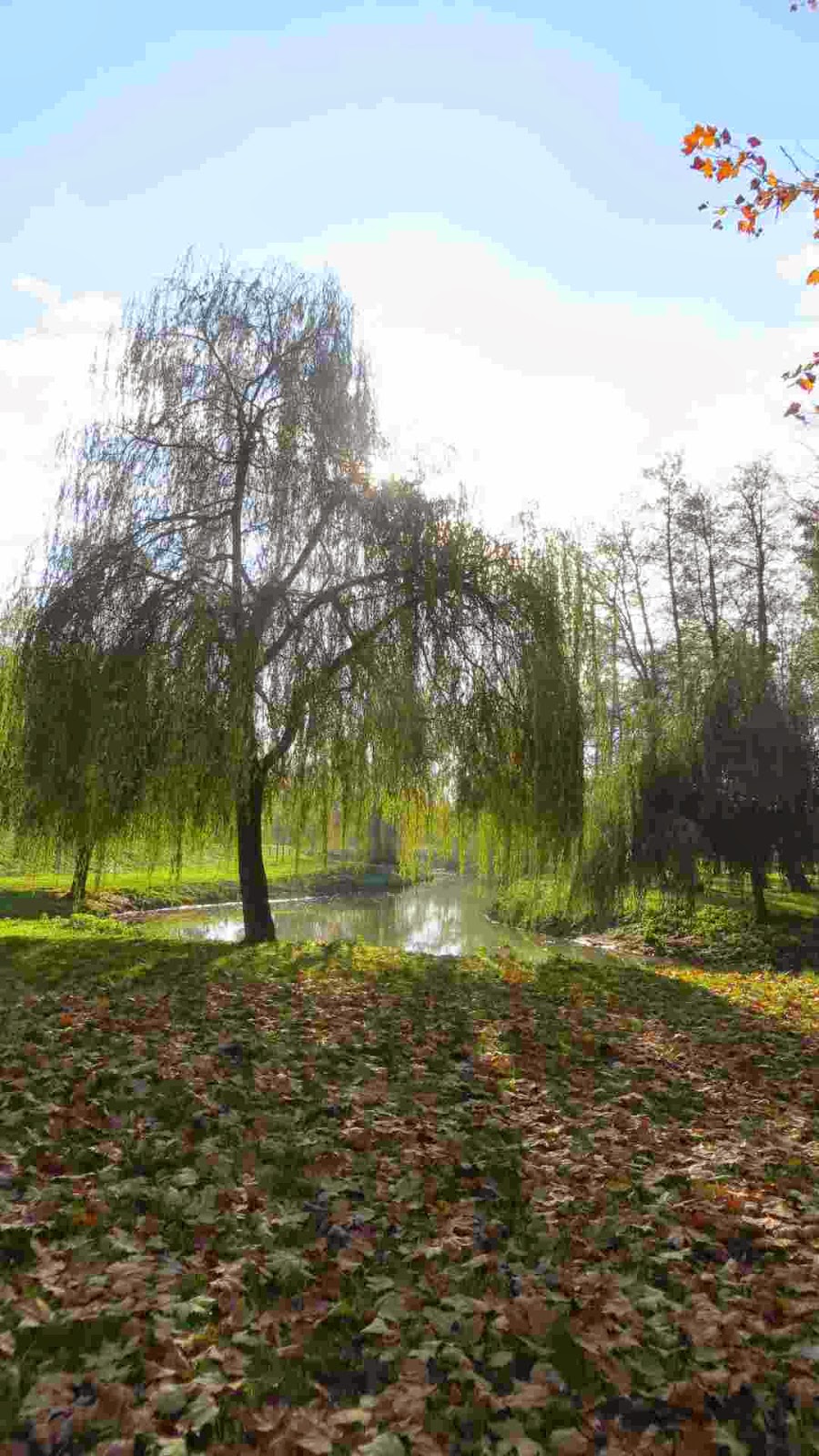
By the lake in Plaisance


Virginia creeper. Soon I'll be sweeping up these leaves


Tuesday, 26 November 2013

The Luminaries: Review


2013 Man Booker Prize Winner: The Luminaries by Eleanor Catton

A week ago I was singing the praises of this book. Now, having finished, I'm not sure. Wonderful writing, but the plot is like a block of Emmental - more holes than cheese. I suspect this will go down as a Marmite book (or should that be Vegemite?): you'll either love it or hate it.

Here's the blurb:

'It is 1866, and Walter Moody has come to make his fortune upon the New Zealand goldfields. On arrival, he stumbles across a tense gathering of twelve local men, who have met in secret to discuss a series of unsolved crimes. A wealthy man has vanished, a whore has tried to end her life, and an enormous fortune has been discovered in the home of a luckless drunk. Moody is soon drawn into the mystery: a network of fates and fortunes that is as complex and exquisitely patterned as the night sky. The Luminaries is an extraordinary piece of fiction. It is full of narrative, linguistic and psychological pleasures, and has a fiendishly clever and original structuring device. Written in pitch-perfect historical register, richly evoking a mid-19th century world of shipping and banking and goldrush boom and bust, it is also a ghost story, and a gripping mystery. It is a thrilling achievement for someone still in her mid-20s, and will confirm for critics and readers that Catton is one of the brightest stars in the international writing firmament.'


SPOILER ALERT:

When I got to the final page (or final few minutes, as I was listening to this on Audible), I thought I'd missed something, skipped a chapter or fallen asleep during the denouement. So I went for a walk and tried to piece some of the parts together in my mind. I tried to remember how each character was linked to the others. Who was who? Where did the gold originate again? And where did it end up? And the gold that was in the 5th dress? And the bullet? Did I miss the explanation of the bullet? Or was the man behind the drape really all there was to it? What about Moody's father? Did he find him in the end?

Considering I ended up with more questions the more I thought about it, I did the next logical thing - I googled. And I found scores of discussions. So I'm obviously not the only one in a state of confusion.

Sure, I glossed over all the astrological stuff. I thought the deeper significance would be explained. I made no attempt to place the compass points on the map and never knew if they were really relevant. I did get confused between the characters at times. But I really thought the whole story would become clear in the end. But it didn't.

Despite all that, this was still a hugely satisfying read. How did Eleanor Catton do that? She kept my attention throughout, kept my curiosity tickled, and I had such an enjoyable time. It feels like a great book you read years ago - one that you recommend to everyone, yet, if they ask, you can't quite remember the story but you remember loving it. The Luminaries just bypasses the stage of actually following the storyline and goes straight to the good memory part of the brain.

So, weirdest review ever: I loved this book despite all the above and would love to read it again.
But I probably won't because I know I'll still be scratching my head.

Will I read Eleanor Catton's first novel, The Rehearsal?
Absolutely.

Monday, 18 November 2013

Reading List

Just finished:


'Fun Home' by Alison Bechdel
I hadn't read a graphic novel before and was amazed what graphics can bring to text. There were no superheroes though in this comic. It is an autobiographical account of the author's life as she examines her homosexuality, mulling over every childhood memory. She wonders why her father died - whether it was suicide or not. She also examines whether her 'coming out' had anything to do with his death. And whether his death had anything to do with the possibility that he was bisexual. An honest and insightful story, with a smattering of interesting literary references. A book I'll definitely read again.


'A Visit from the Goon Squad' by Jennifer Egan
This is described as 'a new classic of American fiction' by Time. Made up of interrelated stories that form a whole. Some characters appear in one chapter, then reappear older and more decrepit in another. I loved this book, yet felt frustrated, as I often do in these type of novels. I can't relax, wondering whether a minor character is just that, or whether they'll take over the story later. I find myself flicking back and forth trying to remember where a character appeared before. I need to read this again.


Currently Reading:


'The Luminaries' by Eleanor Catton
I was planning on reading all the books on the Man Booker shortlist but only managed to read 'Translantic' by Colum McCann and 'Almost English' by Charlotte Mendelson before the award (both fantastic and highly-recommended). So now I'm listening to the winning book on Audible. It is set during the gold rush in New Zealand in the 1860s and the cast of characters is vast. There is a Chinese opium dealer, a Scottish prospector, a whoremonger, a politician, a French legal clerk and a ship captain... among others. This book reads like a classic, with somewhat old-fashioned language and narrative techniques. I'm about two-thirds of the way through and highly recommend it.


 'The Spinning Heart' by Donal Ryan
A debut novel from Donal Ryan, dealing with the property boom and bust in Ireland and how it touched the lives of various people (21 narrators). The writing is honest and beautiful, with distinctive voices, which makes it a very easy book to read. I read the first half in one sitting and looking forward to reading the second half tonight. The first paragraph really draws you in. The narrator, talking about his father, says: 'I go there every day to see is he dead and every day he lets me down. He hasn't yet missed a day of letting me down.' I'll certainly order Donal Ryan's new novel 'The Thing About December' as well.


'Mud' by Michèle Roberts   This is a short story collection. I bought it when I went to hear Michèle speak at the International Short Story Festival in Cork in September. Michèle's writing is rich and sensual, and to hear her read was a pleasure. As with all short story collections, I'm dipping in and out of this slowly to absorb each set of characters and settings better. As Michèle is half-French half-English, I'm particularly interested in her use of language and her settings.


'Young Skins' by Colin Barrett
This is short story collection published by The Stinging Fly. I've read just a couple of the stories so far and love the settings and characters. These midlands-Irish males are so familiar yet under-represented in literature. Brings out the culchie in me!


In the to-read pile:


'After the Fire, A still small voice' by Evie Wyld
I bought this after I read Evie Wyld's story in the Granta 123 magazine. Looking forward to reading it, especially as it's set on Australia's East coast (of which I have many fond memories as a backpacker).


Monday, 11 November 2013

Press 'Submit'

Submit by email. Save the trees.
A carved trunk in Aire sur l'Adour

Upload file and press 'Submit'

I started writing my first novel when I was 17 and submitted it to an editor when I was 21. It was, I thought at the time, an enthralling tale about life in boarding school in Ireland. I remember making the decision to spend half my food budget on the purchase of the Writers' & Artists' Yearbook. I devoured the pages devoted to Irish agents and publishers and chose one lucky editor. I printed off my novel, put it in an envelope and posted it, enclosing an SAE. It cost me a bloody fortune. I didn't know I'd have to wait for six months before I got a reply. I didn't write anything during the wait. When I got a standard rejection I put that novel in a drawer and started another.

My second novel was better. I had learned a little from writing and editing the first. I also had a bit more life-experience to draw from. But, instead of sending this one to an editor, I decided to pay for a professional critique: a sizable expense considering I was earning a tiny salary working as a telemarketer. But I felt it was an investment in my writing career. The critique I received was probably accurate, but terribly off-putting. I deposited my manuscript in the drawer alongside my first.

My third attempt was a children's book. I wrote the first draft and decided I wasn't really a children's writer. I didn't even read children's books at that stage. Fail. Drawer.

I gave up writing for about five years. The freedom! Now I could watch TV like ordinary people without feeling like I should be chipping away at a manuscript into the early hours. I joined a karate club. I took up the flute. I had three children. But eventually the lure of the quill pencil keyboard was too strong.

By now things had changed. Editors and agents had websites with submission guidelines. Published authors had websites and blogs. There were forums for emerging writers, places to exchange critiques, lists of competitions and literary magazines. All this information was free. I spent about a year learning about the craft of writing and finding out about the industry. I wrote short stories and a new novel. Then I came out: I admitted to friends and family that I was a closet writer. In fact I'd won a prize and was to read my short story at a prize-giving ceremony in Birmingham.

In a way I think it's easier for authors these days. Certainly the submission process is easier. Up-to-date submission guidelines are available online. Most agents accept submissions by email or by Submittable (online form). No postage. No printing costs. Save the trees and all that!


This tree trunk fascinates me
every time I visit this park.
Themes of books,
 music and dancing
carved into the wood.
 
I'm proud of my fourth novel, Lost in Lourdes, which is out on submission at the moment. Even after several big rewrites I still love the story and my characters and believe it will be published. But this time, instead of waiting for a reply, I'm tinkering away at my next project.


Tuesday, 29 October 2013

Donostia San Sebastián


A weekend in Spain


We took a trip to San Sebastián last weekend to make the most of the unseasonably warm October weather.

The harbour and bay area


Don Quixote and Sancho Panza


Boys in football gear


San Sebastián is a beautiful, lively city in the Basque region of Spain. The busy shopping area is located right next to the beach. Spanish families eat ice creams and mingle with tourists in the old city. Children play football in the streets, or enjoy the park on the seafront.


Basilica of Saint Mary of the Chorus


Carousel in front of City Hall


Children dressed alike
Adults dressed alike, maybe they're brothers
   
 A stroll through the narrow city streets led us to tapas, and more tapas. Or Pintxos in Basque. Delicious. Although (and I have a hazy memory of a forgotten new year's resolution) my Spanish did let me down badly. The words came out in Italian, in French, even in Irish (!)...  But we still managed to eat well by pointing and gesturing. The locals are used to the influx of tourists, especially French (it's only a half an hour from Biarritz) and switched easily from Spanish and Basque to French and English.


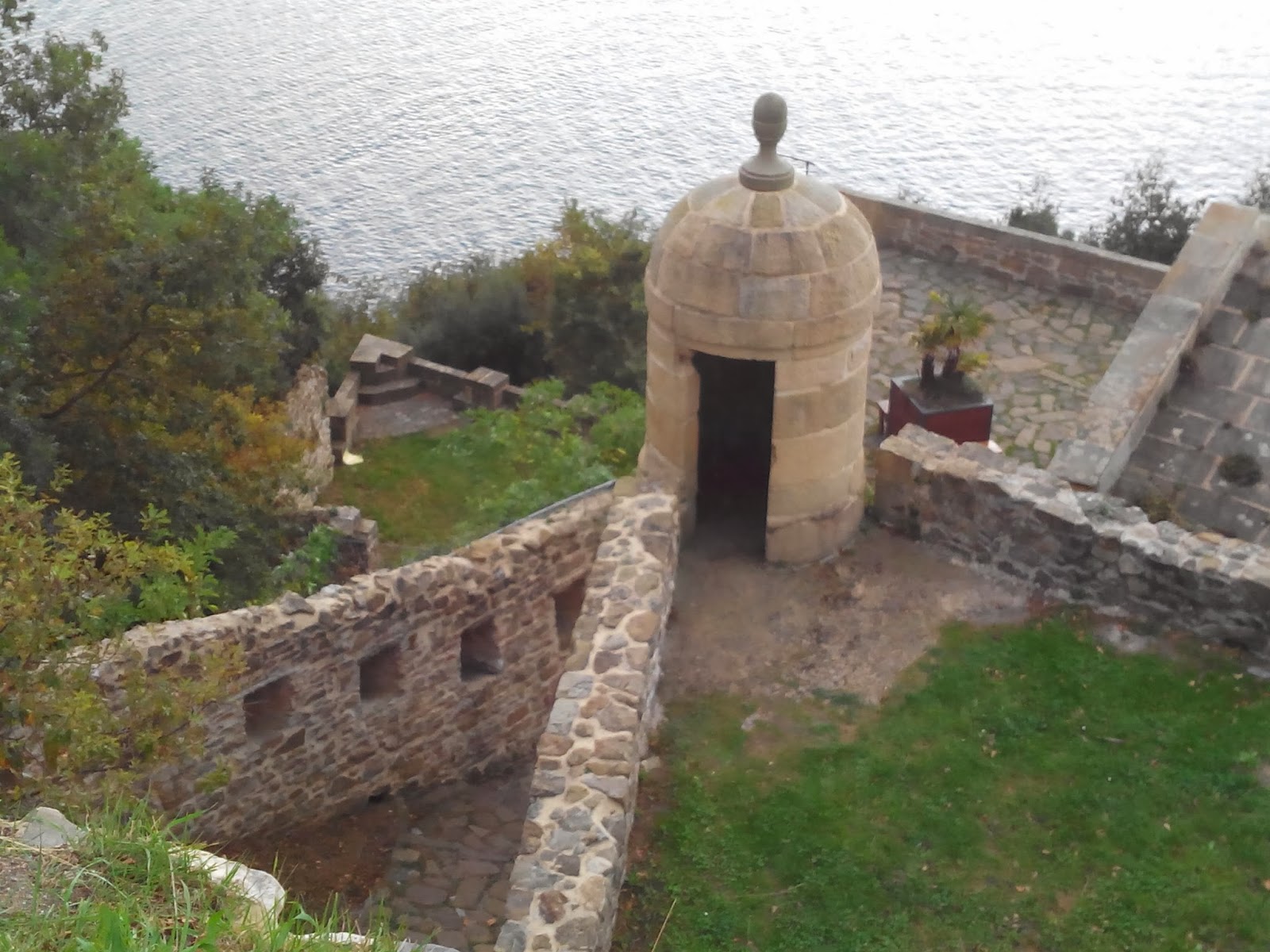
The best views of the city were to be enjoyed from Mount Urgull. We climbed up through the park to the historic castle and the statue of Jesus overlooking the city. My calf muscles are nearly back to normal now, thanks for asking.


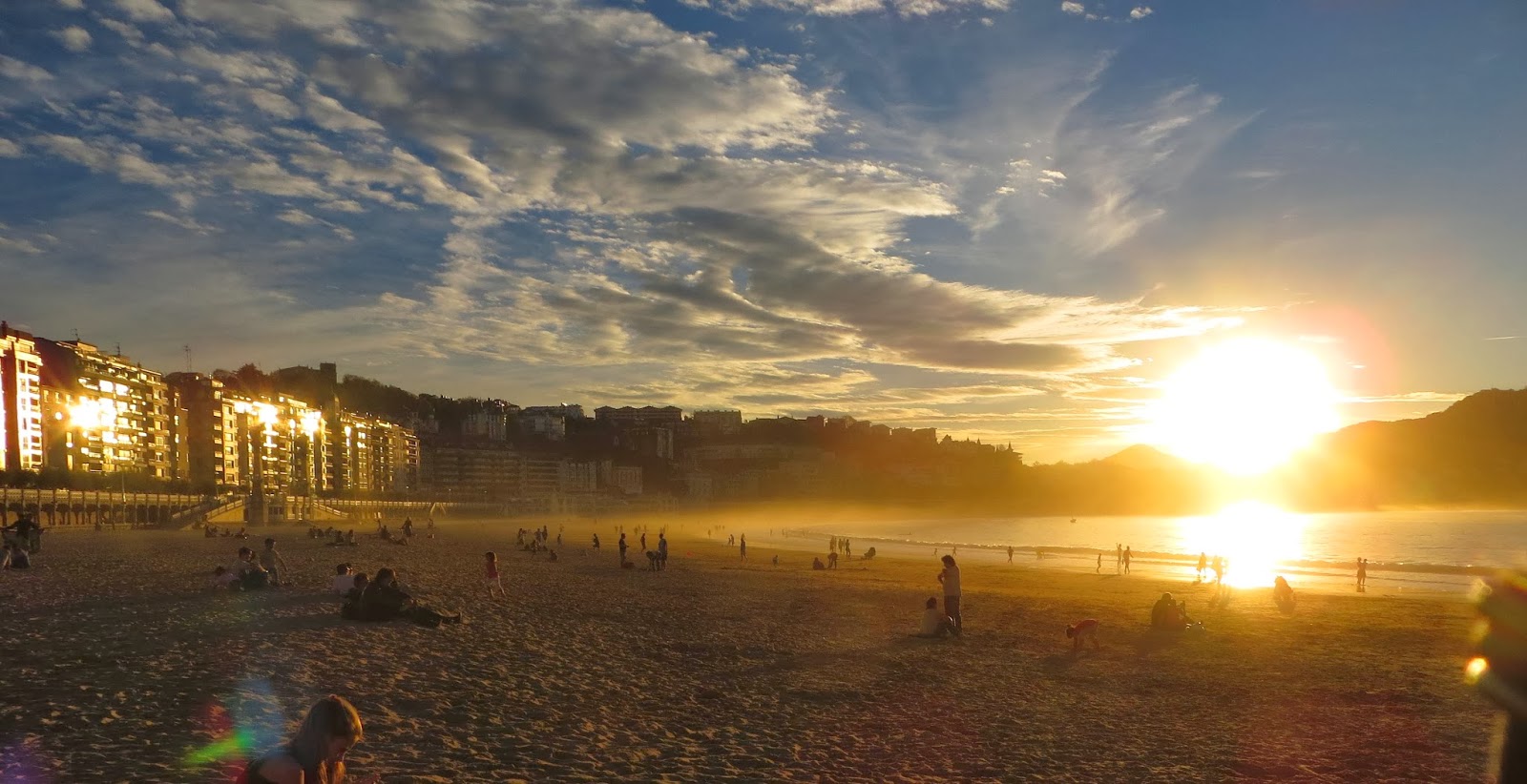
Playa de la Concha was ideal for people-watching. A bride and groom arrived down from the city hall for a photo shoot--the bride struggling through the sand with her long white dress, the groom carrying the Champagne and glasses for that perfect photo. Children played in the sand--often naked, as seems to be the norm. The melodious tune of a saxophonist on the promenade wafted down towards us. A businessman arrived after work with a novel, stripped down to his boxers, and went in for a swim. Then he lay there reading until he was dry enough to put back on his shirt and tie and head home. Made me wish I lived closer to the sea.


Certainly the nicest city beach I've ever visited.


Tuesday, 22 October 2013

Le requin marteau et les jours de la semaine

Le requin marteau et les jours de la semaine - Martin
My nine-year-old son came home from school last week begging to be brought to hear David Dumortier reading poetry in the library that evening. He's not usually a bookish kid--more an outdoorsy type--so I was rather surprised. He went on to explain that David had been to his school that afternoon and had performed magic tricks. Aha! He wanted to see a magician, not a poet.

David is a fantastic entertainer. Reciting poetry, embedded in magic tricks, he made the kids laugh. One child was brought to the stage to learn how to do nothing. David had invented a machine to help him. The kid sat winding a handle on a toy that did nothing. Every time he stopped he was prodded to 'keep it up, do nothing' and he had to wind again.

Meanwhile a child helped carry a magician's hat around the audience and David pulled out lines of poetry, read them and threw them into the air. My son grappled with the rest of the kids to grab as many as he could.

It was a great performance. He's a great speaker. He also managed to sell a few books. But, as a writer, I'm depressed at the idea of having to do a similar performance to sell my work. These days it seems that writing the book is only part of the deal. Engaging with the public to persuade them to buy it is a huge part of the writer's job. But what do you do if you're not naturally a magician or entertainer?

The outcome for my nine-year-old: He begged if he could write a poem before bed. I agreed (bemused, amazed). He produced the above poem. He announced that it was 'full of originality' (Then he checked what originality means.) Still, I'd call that a result!

Wednesday, 9 October 2013

Literature in translation

When I ordered the summer edition of The Stinging Fly I discovered it was dedicated to literature in translation and included fiction from Belgium, Italy, China, Poland, Rwanda, Ukraine, Morocco, Greece, Netherlands, Spain, Austria, Brazil and Finland.

The translators of these stories were interviewed for the journal. They were asked: Why is literature in translation important? What is your reaction to the term untranslatable? How would you describe your relationship with the author after you get involved with the translation? Responses were fascinating. I hadn't considered the relationship between the translator and the author, or how the author can lose a little of their own book when it's been translated into a language they can't read.


Having studied Applied Languages (French and German), I was oriented towards employment as a translator. After graduation, I managed three months in a tiny translation agency, where the work was mind-numbingly boring and the working environment was less than attractive. (My boss used to kick holes in the walls in childish tantrum when things weren't going his way. Not a nurturing environment!) I translated German accident reports for insurance companies. Every report started with 'I was driving on the left when...'

Technical translation and localisation were not for me, however I did and do remain in awe of literary translation. You can learn so much about language by trying to render an expression written in another language into English, or from English into another language. Metaphors, similes, regional dialects--they require the translator to stop, reflect, choose. We mull over the connotations of one word over another. Even simple vocabulary is not straightforward. A castle is a château in French, but the mental images we create when we hear those words are very different.

Haruki Murakami spent many years translating some of the great novels into Japanese. He wrote, about his translation of The Great Gatsby: “Although numerous literary works might properly be called ‘ageless', no translation belongs in that category. Translation, after all, is a matter of  linguistic technique, which naturally ages as the particulars of a language change. Thus, while there are undying works, on principle there can be no undying translations.”

In Claire Kilroy's essay, in the translation issue of The Stinging Fly, she tells a great story about one of her pieces that was translated into German. She discovered that the sentence 'The men were padding around the boardroom' had been translated as 'the men were walking about in bare feet like animals'. This is a worrying thought for any author whose books are translated into languages they don't speak and can't check.